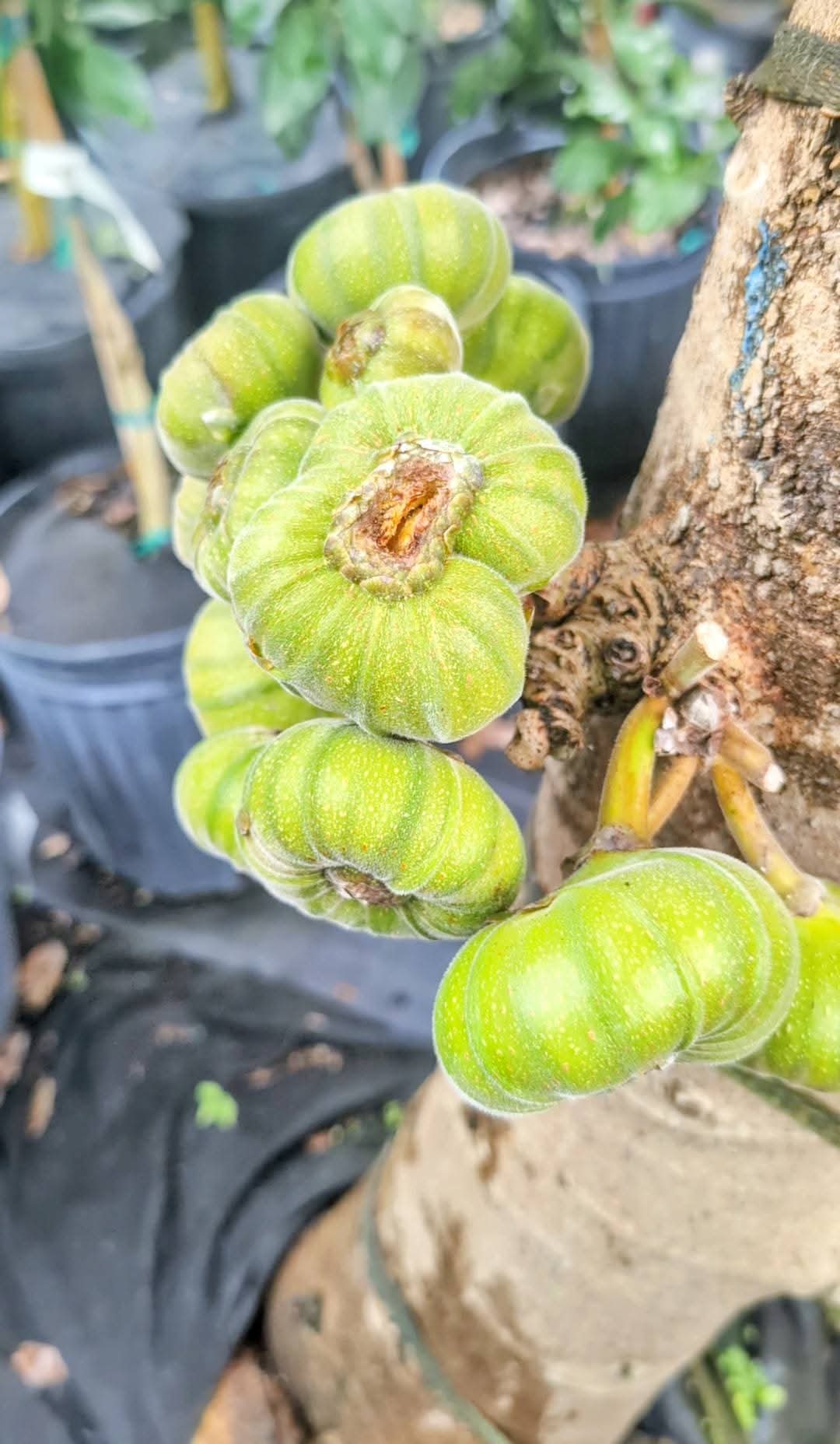
🌿 Elephant Ear Fig & Rare Phytochemical Power
If you think all figs are the same… you’ve never met this one.
Ficus auriculata—the Elephant Ear Fig—contains compounds so unique that researchers had to name new molecules after discovering them.
Across Nepal, Northeast India, Bangladesh, Bhutan, and Southeast Asia, every part of this tree—leaf, bark, fruit, root, and latex—has been used for wounds, infections, diarrhea, swollen glands, diabetes, digestive disorders, and liver issues.
Modern science now confirms the chemistry behind these traditional uses.
🌿 What Are These Compounds?
Rare Isoflavones (newly identified molecules):
Discovered in the fruit and roots.
These extended-chain isoflavones show stronger antioxidant and anti-inflammatory action than typical plant flavonoids.
One newly identified fruit isoflavone displayed potent antibacterial activity against pathogens responsible for intestinal infections—mirroring traditional use for dysentery and cholera.
Large-Ring Lactones (from stems):
Uncommon plant compounds.
In vitro studies show these lactones stimulate osteoblast proliferation, the cells responsible for building bone—making F. auriculata one of the few medicinal trees with documented bone-forming potential.
Flavonoids (quercetin, myricetin, rutin):
Powerful antioxidants that reduce inflammation, protect tissues, improve microcirculation, support wound healing, and stabilize metabolic pathways.
Triterpenoids (lupeol, betulinic acid):
Well-known for skin repair, collagen support, anti-inflammatory effects, and antimicrobial protection—key to the traditional poultices used for wounds, boils, and swollen glands.
Coumarins (scopoletin, bergapten):
TO CONTINUE READING THE ARTICLE PLEASE SEE PAGE 2

